Teachers
Fractals for kids
A fractal is a shape made of smaller copies of itself. Look closely at a piece, and you see the whole shape again, smaller. Nature is full of them, and you can draw one in five minutes.
What is a fractal?
Break a small branch off a tree. It looks like a little tree, with its own trunk and branches. Break a twig off that branch, and it looks like a tiny tree too. That is the secret of a fractal: the parts look like the whole.
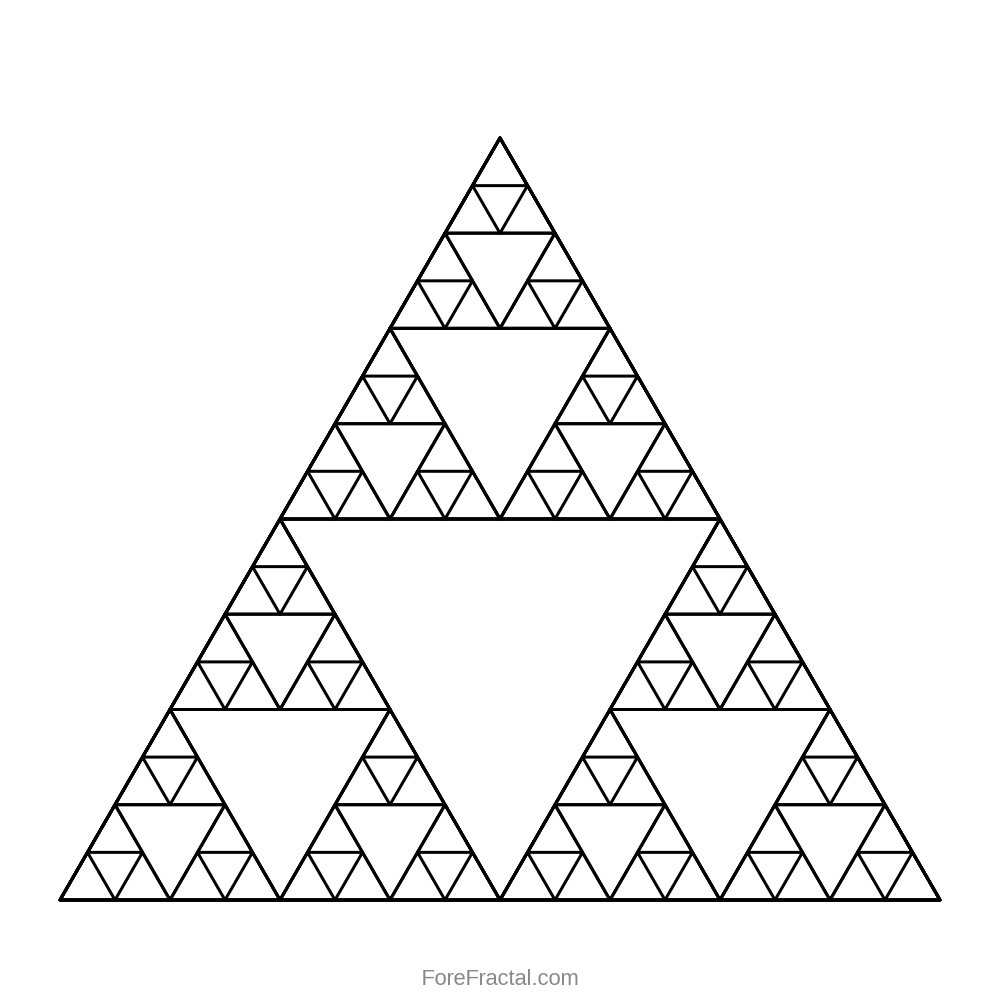
Mathematicians make fractals by repeating one simple step over and over. Draw a triangle, cut out the middle, and do the same to each smaller triangle that is left. After a few steps you get a beautiful pattern called the Sierpiński triangle.
The word fractal was invented in 1975 by Benoît Mandelbrot. It comes from a Latin word that means “broken”, because many fractals look rough and broken, like a rocky coast or a crack in ice.
Fractal hunt
How many of these can you find at home, in the park or at the shop? Tick them off in your head or print the page.
Things to make
1 Draw a Sierpiński triangle
✂ Paper, a pencil, a ruler and coloured pens
- Draw a big triangle.
- Mark the middle of each side and join the three marks. You now have four triangles; colour the middle one dark.
- Do the same in each of the three corner triangles.
- Keep going as small as you can. How many white triangles are left after three rounds? (Answer: 27.)
2 Grow a fractal tree
✂ Paper and a pencil
- Draw a trunk: one straight line going up.
- At the top, draw two shorter branches in a V shape.
- At the end of each branch, draw two even shorter branches.
- Repeat until the branches are tiny. Try a wider or narrower V to grow a different tree.
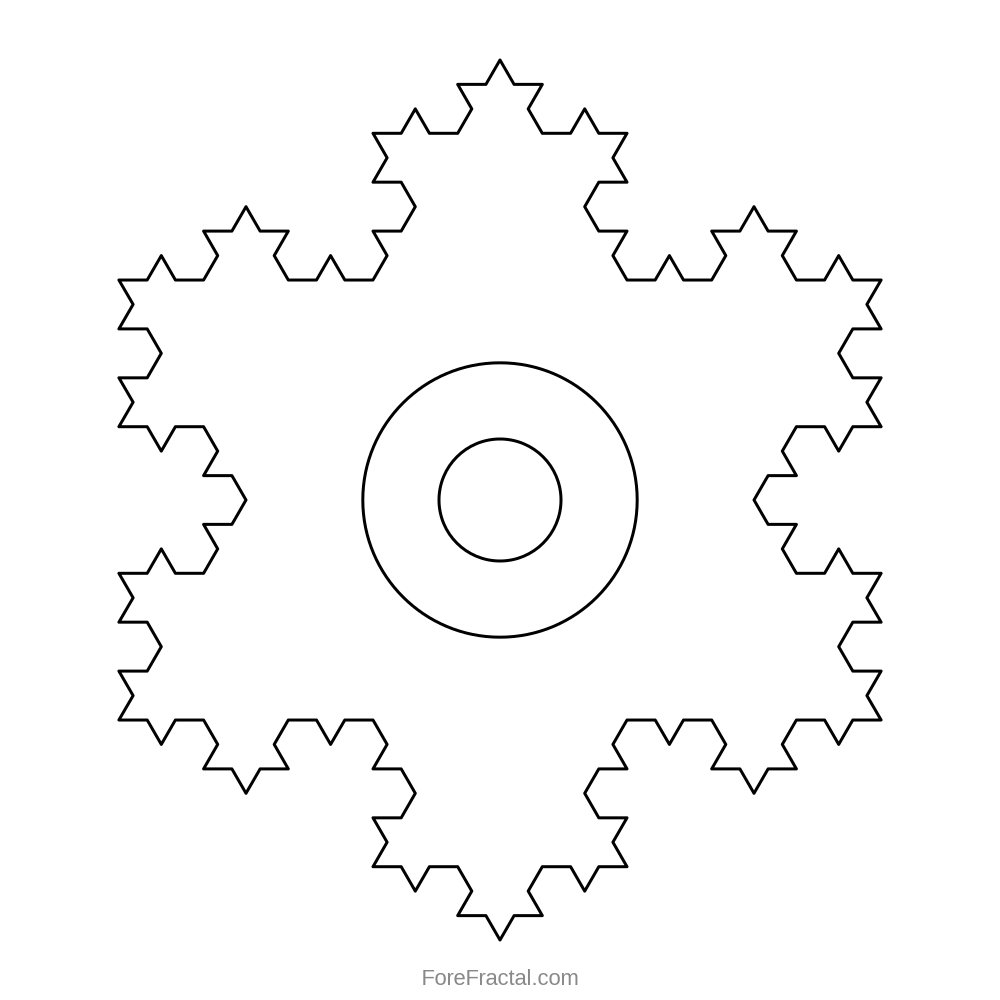
3 Make a Koch snowflake
✂ Paper, a pencil and a ruler
- Draw a triangle with sides of 9 cm.
- Split each side into three parts of 3 cm and draw a little triangle on the middle part, pointing outwards.
- Now you have a star with 12 sides. Do the same on each side (1 cm parts).
- Look: the snowflake’s edge gets longer every time, but the snowflake never gets bigger than a circle around it.
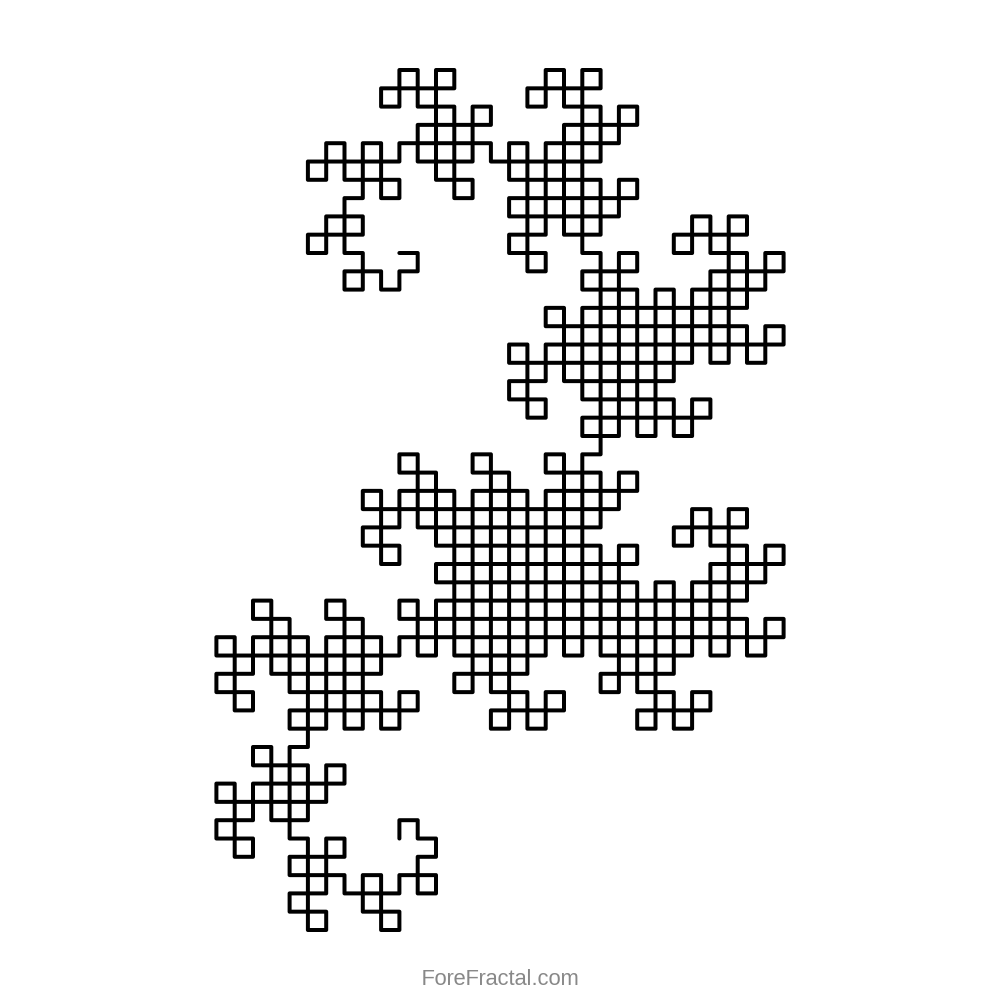
4 Fold a paper dragon
✂ A long strip of paper
- Fold the strip in half, always in the same direction.
- Fold it in half again, and again, four or five times.
- Unfold it and open every fold to a right angle.
- Stand it on its edge and look from above: you made a dragon curve!
5 Play the chaos game
✂ Paper, a pencil, a ruler and a dice
- Draw three dots far apart and call them 1–2, 3–4 and 5–6.
- Draw a starting dot anywhere.
- Roll the dice, find the corner with that number and draw a new dot exactly halfway between your last dot and that corner.
- Repeat 50 times. A Sierpiński triangle slowly appears! The computer version is on the chaos game page.
Colouring pages
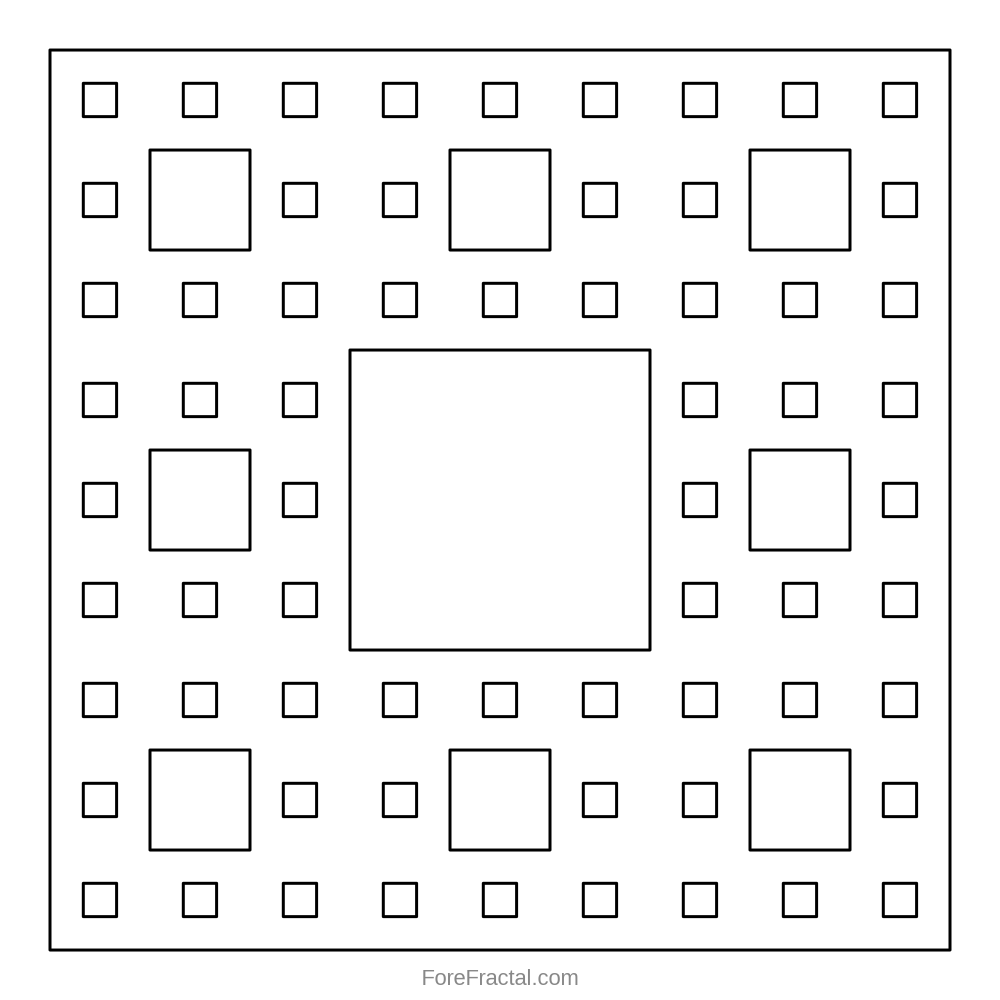
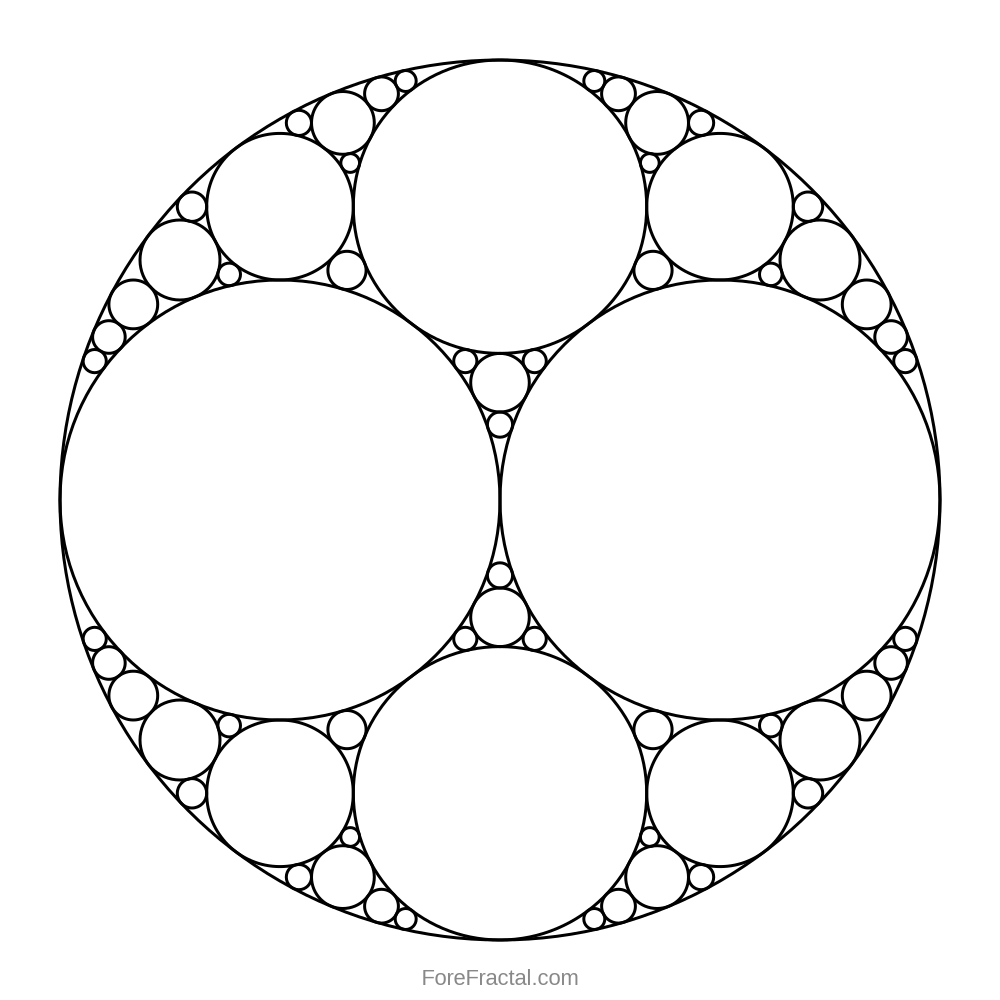
Print these free pages and colour them in. Try a pattern: one colour for big shapes, another for small ones.

Mini quiz
Amazing facts
- If you unfolded all the air tubes in your lungs and laid them end to end, they would stretch for about 2,400 kilometres.
- A Koch snowflake has an edge that is infinitely long, but it fits inside a small circle.
- Fractals help people make films: the mountains, clouds and forests in many animated movies are drawn by fractal programs.
- Some phones have fractal-shaped antennas inside, because a fractal can squeeze a long wire into a tiny space.